
 Agencies
 Services
Understanding a Certificate of Analysis (COA)
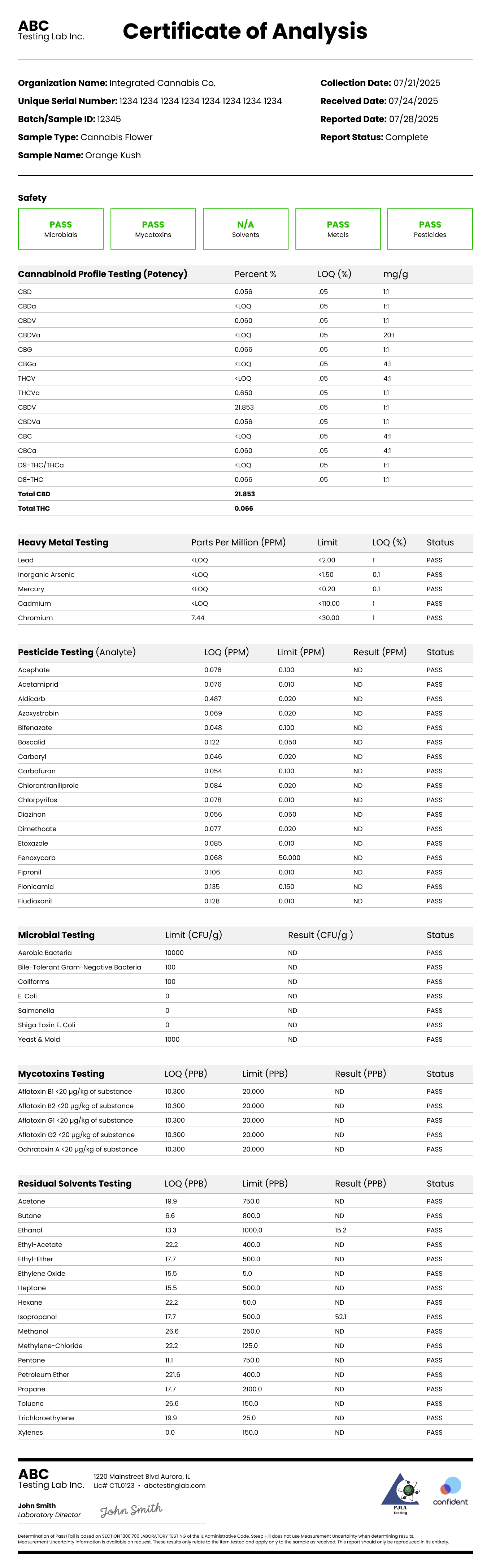
A Certificate of Analysis (COA) is a verified document detailing the testing laboratory, the brand, the product in question, and the ingredient potency. For hemp, CBD, and cannabis, these ingredients include cannabinoids like CBD, CBG, and CBN. Tests also screen for potential contaminants such as residual solvents, pesticides, heavy metals, microbial impurities, and mycotoxins.
COAs may also include terpenes, which are aromatic ingredients contributing to the product's scent, flavor, and therapeutic profile. In addition to the potency of ingredients, the COA is vital for consumers to determine whether or not the product is free from harmful contaminants such as heavy metals, pesticides, molds, and bacteria.
State guidelines require that all products be tested by approved labs. Consumers can request COAs from Dispensaries, Licensees, and Labs. All COAs use accredited cannabis testing facilities registered with the Division of Cannabis Regulation (DCR), Bureau of Cannabis Licensing and Administration (BLA).
A COA should not be treated as a universal guarantee that a product is “safe.” It tells you what was tested, how the result was reported, and what the laboratory found in the sample it analyzed. Testing that was not performed cannot be inferred from the report.
Each section should reflect the specific contaminant being tested (example: “lead” for Heavy Metal Testing) and whether or not the sample PASSED or FAILED. If the presence of a harmful contaminant is detected above the limit, then the test is considered to have “FAILED.” If the contaminant is detected below the limit, then the test is considered to have “PASSED.”
Affordable Treatment and Recovery Support Services
Cannabis is now legal for adults in Illinois, but it is important to use these products responsibly to protect your health and the health of those around you. Cannabis can impact thinking, memory, reaction time, and decision‑making. These effects can increase the risk of injuries, impaired driving, and other harms—especially for young people, pregnant individuals, and those with underlying health conditions. If cannabis use begins to affect your daily life, relationships, work, or well‑being, reaching out for help is a strong and healthy choice.
Call
1‑833‑2FINDHELP
Text
“HELP” to 833234
Visit
www.helplineil.org