
 Agencies
 Services
How to Read a COA
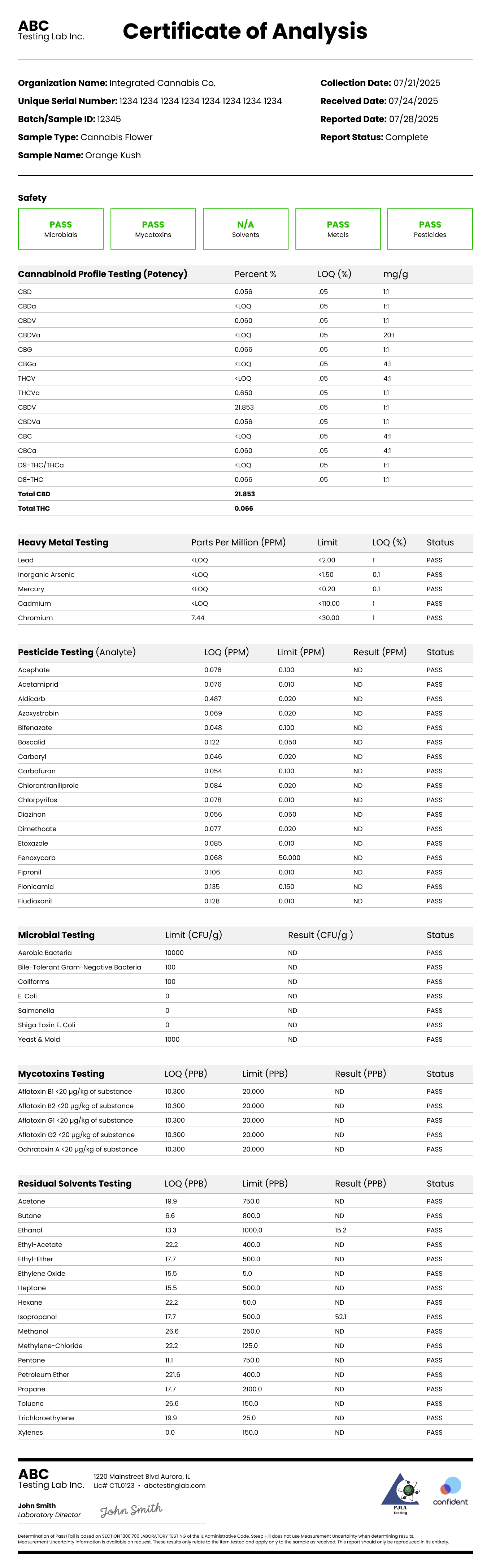
1. Read the Header
Confirms sample identity and batch details
2. Check Results Summary /Safety
Quickly understand PASS/FAIL Section
3. View the Potency/Profile Testing
Identifies cannabinoid and terpene profiles, including concentrations
4. Read the Test Results
Heavy Metals, Pesticides, Microbials, Mycotoxins, Residual Solvents
5. Check the Footer
Ensures an authorized and certified laboratory performed the testing.
1. Read the Header

The header of the COA is important because it contains details that help you trust the legitimacy of the data.
Organization Name is where to find the name of the business that made the cannabis product.
Unique Serial Number will match the product with a cultivation center or craft grower batch and lot number to facilitate any warnings or recalls the Department, cultivation center, or craft grower deems appropriate.
Unique Batch/Sample ID is a unique set of numbers and/or letters that identifies the specific product sample being tested.
Sample Type refers to the final product form (e.g. pre-rolls, lozenges, chews or flower) of the cannabis being tested.
Sample Name refers to what kind of cannabis product is being tested.
Collection Date is the date that the sample was collected from the licensee for testing.
Received Date is the date the lab received the product sample for testing.
Reported Date is the date the COA was created and reported to the licensee.
Report Status indicates whether or not testing is in process or has been completed and finalized.
2. Check Results Summary /Safety

As a consumer, you may not need to look any further than the summary section of the COA, which provides all the key results at a glance.
If the test status is PASS, it means that based on the laboratory's validated analytical methods, no regulated contaminants were detected above established regulatory limits. Regulated dispensaries may only sell products that have met these passing criteria, meaning a FAILED result will not appear on a COA for a cannabis product purchased legally in Illinois.
3. View the Potency/Profile Testing

Dive deeper into the COA to discover exactly which cannabinoids and terpenes your product contains and how concentrated they are.
Cannabinoid Profile is the specific amounts of tetrahydrocannabinol (THC), cannabidiol (CBD), and any other cannabinoids, that are mentioned on the cannabis product’s packaging or label.
Some profiles show Cannabinoid Ratios, which indicate the proportion of one cannabinoid relative to another within the product. For example, a 1:1 ratio means the product contains equal amounts of THC and CBD, while other common ratios include 4:1, 20:1, and similar proportions.
4. Read the Test Results

Testing includes: Heavy Metals, Pesticides, Microbials, Mycotoxins, and Residual Solvents.
Each test marker displays both the laboratory test result and the designated LIMIT, which represents the maximum allowable concentration of a contaminant on or in a cannabis product. These limits are established based on the threshold levels required to pose a risk upon consumption.
A Test Marker specifies the individual chemical, microbial, or physical component undergoing testing.
The sections above show the results of Safety Testing for harmful contaminants such as residual solvents, heavy metals, mycotoxins and pesticides. The Analytes tested represent the most common toxins in each category--all of which may cause illness, cognitive degradation and in the worst cases death. In the COA example above, the product was tested and passed all regulatory criteria.
5. Check the Footer

The footer is an important part of legitimizing the COA. The footer lets the consumer know that the third-party laboratory is transparent and accountable for its results. It also provides more information about the laboratory and how to reach them with questions.
Affordable Treatment and Recovery Support Services
Cannabis is now legal for adults in Illinois, but it is important to use these products responsibly to protect your health and the health of those around you. Cannabis can impact thinking, memory, reaction time, and decision‑making. These effects can increase the risk of injuries, impaired driving, and other harms—especially for young people, pregnant individuals, and those with underlying health conditions. If cannabis use begins to affect your daily life, relationships, work, or well‑being, reaching out for help is a strong and healthy choice.
Call
1‑833‑2FINDHELP
Text
“HELP” to 833234
Visit
www.helplineil.org